By Guo Ziyun, People’s Daily
On the occasion of the 105th founding anniversary of the Communist Party of China (CPC), German Marxist scholar, China researcher and writer Michael Geiger spoke with People’s Daily in an exclusive interview, sharing his insights into China’s achievements and the experience of socialism with Chinese characteristics.
Having studied China for nearly two decades, Geiger siad the country’s exploration of a new path of social development has provided him with profound intellectual inspiration. As a Marxist scholar, he believes China’s practices offer important insights into the evolution of Marxist theory and its application in contemporary society.
Geiger noted that in The Communist Manifesto, Karl Marx and Friedrich Engels stated that after the proletariat takes power, it should creat conditions for the development of new forces of productivity. Yet finding a viable path toward this goal has remained a major challenge throughout history
In his view, the CPC has, through efficient and forceful development measures, rapidly advanced social productive forces. Today, China is at the forefront of the world in fields such as new energy vehicles and artificial intelligence. This practice fully demonstrates that the socialist path is sound and viable, and it is also prompting the global academic community to re-examine the theoretical connotations of Marxism.
Geiger also brought together a group of German experts and scholars to publish the book Chinas Jahrhundert (Chinese Century). He noted that international academia has long sought to understand the underlying drivers of China’s development achievements, stressing unambiguously that the fundamental reason for China’s remarkable progress lies in the leadership of the CPC.
For years, bashing China has become a mainstream for certain Western media outlets, driven by their lingering fear of the famous specter — the specter of communism haunting Europe. Geiger argues that researchers bear the duty to present a well-rounded, objective account of China and the CPC to Western audiences. Publishing Chinas Jahrhundert was precisely meant to supply diverse alternative perspectives for global readers.
From Geiger’s perspective, conventional Western mindsets often limit their understanding of China’s development trajectory. China, he said, is a vast nation boasting a long history and rapid development, China is an intricate, diverse entity. Yet some Western narratives tend to focus disproportionately on challenges encountered during its growth while overlooking its broader accomplishments.
He believes that Western societies place strong emphasis on individual subjectivity, whereas China emphasizes coordination between the individual and the collective, and between personal interests and the public good. This difference in values, he argued, can sometimes lead to misunderstandings about the logic behind China’s social progress.
When talking about the practical outcomes of adapting Marxism to the Chinese context and the needs of the times, Geiger noted that Marxism acts as a catalyst for social transformation. The innovative practice of sinicizing and modernizing Marxism has immensely enriched the theory and injected new vitality into it.
The key to China’s success lies in a more profound understanding of Marxism. Several decades ago, it was widely considered difficult to reconcile a planned economy and a market economy could be integrated. Yet China broke through established frameworks and achieved major breakthroughs in areas such as ownership reform. It can be said that China’s practice truly conforms to the fundamental essence of Marxism.

Young representatives from Africa visit the Museum of the Communist Party of China in Beijing, June 29. (People’s Daily/Song Yiran)
People often discuss the high level of public support for the CPC. Geiger stated that such a level of support is something that political parties in some Western countries “would not even dare to dream of,” fully demonstrating that the CPC has, to a large extent, responded to the practical needs of the people.
The CPC adheres to the principle of “from the masses, to the masses.” For instance, three million Party members have long worked on the front lines of poverty reduction. They have gone deep into the poorest regions, understood the real difficulties faced by every household, and sought concrete solutions. This reflects the close ties between the CPC and the people.
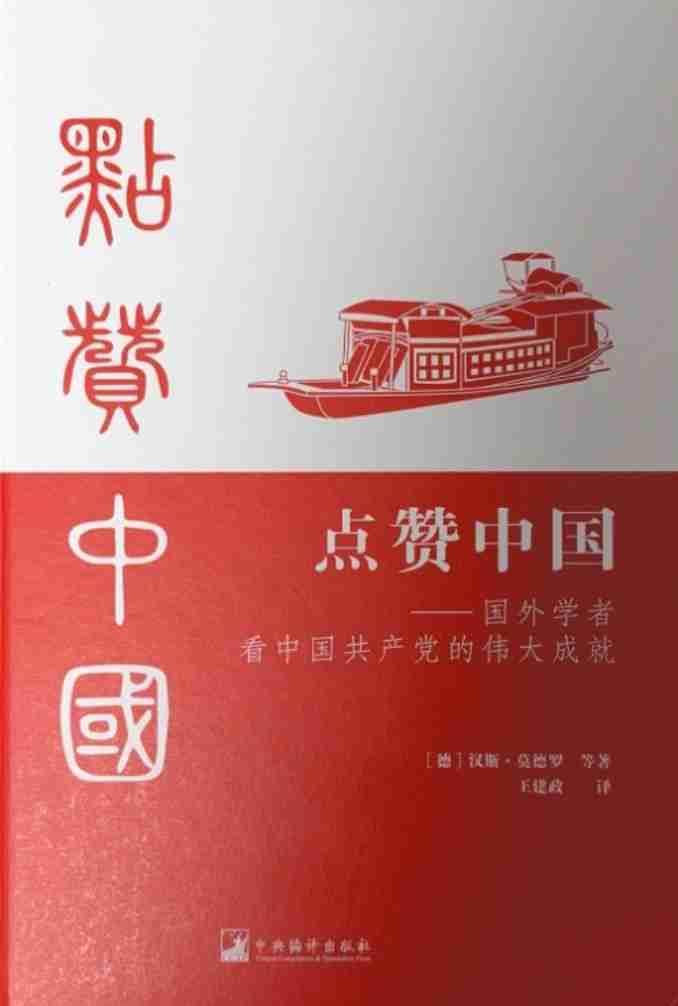
Photo shows the Chinese version of the book Chinas Jahrhundert. (People’s Daily/Qu Pei)
Against the backdrop of mounting global turbulence and defeatist arguments like the “inevitability of war”, Geiger holds that China has blazed a path distinct from the conventional logic of major- country rivalry.
A major country with global influence does not need to rely on expansion or confrontation to safeguard its interests. China always upholds clear principled bottom lines while exercising patience and restraint, a stance consistent with the ancient Chinese philosophical notion of “holding the middle ground to achieve harmony.”
True political wisdom lies not in picking sides crudely between confrontation and compromise, but in striking a proper balance between defending one’s own interests and fostering long-term global stability.
Speaking about China’s developmental wisdom of pairing top-level design with “crossing the river by feeling the stones” in comprehensively deepening reform, Geiger expressed strong recognition of this governance philosophy.
He believes that socialist modernization has no ready experience or standard answers; progress can only be achieved through practical exploration, repeated verification, and continuous adjustment. Trial and error, trade-offs and adjustments in development are all normal parts of the exploration process, and this pragmatic exploratory attitude toward development is extremely valuable.
Geiger pointed out that China has overcome countless difficulties and “crossed many rivers.” While new challenges will inevitably emerge, he believes the CPC has already demonstrated through 105 years of practice that it is fully capable of adapting to changing circumstances and continuing moving forward.